

-
Daycares
-
Nannies & Au Pairs
Results-driven professional development to strengthen your childcare services
We help childcare providers go from great to exceptional. While most bring meaningful experience and training, a strong understanding of attachment theory is essential for creating optimal social-emotional experiences for children.
Our professional development equips early childhood providers with practical tools to support emotional development, respond to challenging behaviors, and build resilience in children.
We extend this learning to families within early childhood communities, creating alignment between home and care environments so children can thrive from their early years through adulthood.
CASEL (Collaborative for Academic, Social, and Emotional Learning) is the leading framework for social-emotional learning in education.
Most childcare providers are unaware that there are social emotional standards for children pre-K through 12th grade. These competencies need to be taught well before pre-K.
- Self-Awareness: Recognizing one’s emotions, values, and strengths
- Self-Management: Regulating emotions and behaviors in different situations
- Social Awareness: Understanding and empathizing with others
- Relationship Skills: Building and maintaining healthy relationships
- Responsible Decision-Making: Making constructive choices about behavior and interactions

From Social-Emotional Skills to Durable Human Skills: Preparing Children for an Evolving Workplace
With the Rise of AI, “Soft Skills” are changing to “Hard Skills”
The majority of the top 10 skills needed today and in 2030 require emotional intelligence (secure attachment)
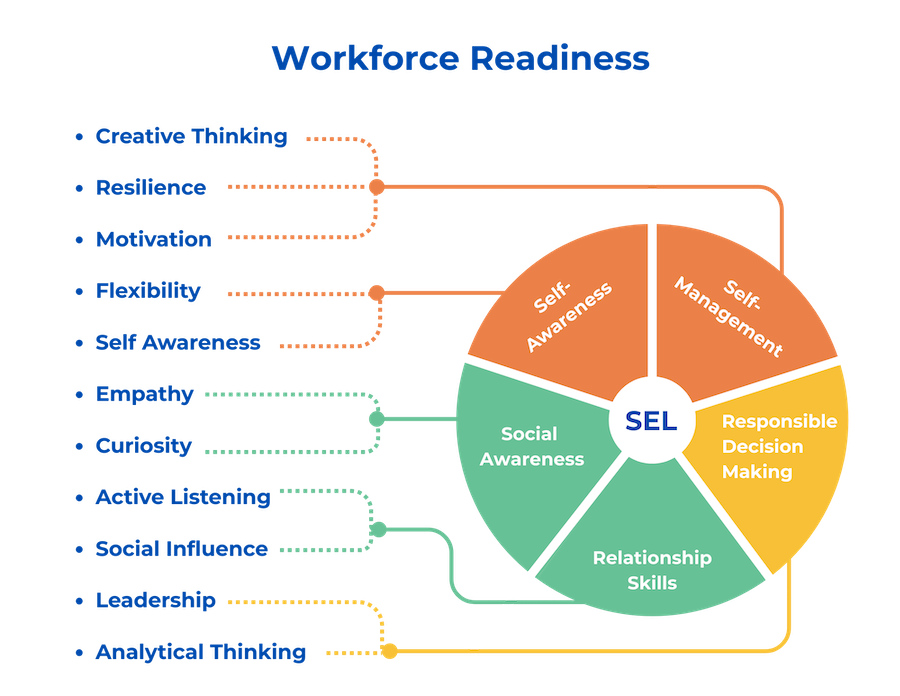
Collaborative for Academic, Social, and Emotional Learning (CASEL) hosted a webinar entitled The State of the Field 2026: Human Skills for a Changing World.
Their main message: To prepare students for 2030 workplace readiness, districts and schools must update their SEL plans to teach students durable human skills through relationships.
Self-regulation is the cornerstone of emotional intelligence. It has to be taught.
The critical window for teaching children about self-regulation is 0-5 years old, yet the majority of children don’t learn it.


Attachment-based education for early childcare providers ensures that children learn.
Why it matters?
“Teachers have seen a troubling rise in students’ lack of self-regulation and their inability to manage behaviors and emotions… Students’ poor self-regulation skills are negatively impacting learning, as well as teacher and staff morale.”
— Education Week, January 2025
When caregivers consistently attune to children's needs and teach and model social-emotional skills, children feel safe and learn to trust themselves, others, and the world around them.
Cultivates self-awareness
When caregivers reflect a child’s feelings back to them with attunement, children learn to notice, name, and understand their own internal states.
Builds self-management
Co-regulation with trusted adults helps young children develop the skills to eventually regulate their own emotions.
Supports decision-making
A secure base gives toddlers the confidence to explore, problem-solve, and make age-appropriate choices.
Develops relationship skills
Children with secure attachments learn trust, communication, and how to navigate social interactions.
Creates social awareness
Through attuned interactions, children learn to read emotional cues and develop empathy for others.
We can’t teach what we didn’t learn, but we can learn what we need to teach.
Why Attachment Matters in Daycares?

Besides parents, daycare staff have a large influence over children’s attachment styles. Strong relationships are the foundation of early learning. When staff consistently provide emotional safety, responsiveness, and co-regulation, children thrive. Daycare settings are often where children spend the majority of their waking hours, making staff relationships just as influential as your program.
Attachment Directly Impacts Behavior & Learning
Secure relationships reduce challenging behaviors and emotional dysregulation in young children. Children who feel safe are more curious, engaged, and ready to learn. Behavior is communication, attachment helps staff interpret needs rather than manage symptoms.
Caregiver Sensitivity Is a Trainable Skill
Research shows caregiver sensitivity is a key predictor of attachment security. Attachment-informed strategies help staff respond calmly under stress. Consistent, attuned responses build trust, even during transitions, separations, and big emotions.
Attachment-Informed Teams Are Healthier Teams
Staff feel more confident and less burned out when they understand child behavior. Shared language and strategies create consistency across classrooms. Strong adult regulation leads to stronger child regulation.

Spotlight on Research
The transition to daycare is a progressive and delicate process considered essential for a child’s future adjustment, during which children need a secure base to explore their new environment, play, socialize, feel protected, and build relationships with others.
Finding a Secure Base: Exploring. Children’s Attachment Behaviors with Professional Caregivers During the First Months of Daycare.
(Macagno & Molina, 2024)
Daycare In-Person/Virtual Workshops
Professional Caregivers Workshops
Workshop 1: Understanding Attachment Styles to Support Children
This 90-minute workshop introduces professional caregivers to attachment theory and its critical role in shaping caregiver-child relationships. Participants will explore how attachment develops in early childhood and influences children’s social interactions, emotional development, and behavior. Through practical insights, caregivers will learn to identify different attachment styles—secure, anxious-preoccupied, dismissive-avoidant, and fearful-avoidant (disorganized)—and discover strategies to support the unique emotional and developmental needs of each child in their care. By the end of the session, caregivers will have a deeper understanding of how to foster stronger, more attuned relationships that promote emotional safety, resilience, and healthy development in childhood settings.
Key Objectives:
- Understand Core Attachment Styles: Build foundational knowledge of the four primary attachment styles and how these relational patterns develop in early childhood and shape children’s behavior.
- Recognize the Impact on Development and Behavior: Identify how different attachment patterns affect children’s emotional regulation, peer relationships, transitions, and daily routines, reframing behavioral challenges as attachment-based responses rather than defiance or willfulness.
- Apply Strategies to Foster Secure Attachment in Care Settings: Implement practical, attachment-informed approaches that promote emotional safety, consistency, and relational repair—building the foundation for secure, resilient, and emotionally healthy young children.
Workshop 2: The Connected Caregiver: Attachment, Regulation, and Everyday Practice | Two-Part Series
A Two-Part Professional Development Series for Professional Caregivers
Part 1: Understanding Attachment & Emotional Regulation
This 90-minute foundational workshop explores how early attachment experiences shape children’s capacity for emotional regulation—the cornerstone of social, emotional, and future academic and work success. Caregivers will learn how insecure attachment patterns form in the home, the core wounds and coping mechanisms that drive challenging behaviors in care settings, and specific intervention strategies to support dysregulated children and help them build new, healthier emotional responses. Participants will develop a deeper understanding of the “why” behind children’s behavior and gain concrete tools to support regulatory development.
Key Objectives:
- Illuminate Root Causes: Connect early caregiving patterns to children’s core wounds, needs, and coping strategies that surface as challenging behaviors in care settings.
- Center Emotional Regulation: Clarify why emotional regulation—not developmental milestones alone—is the cornerstone of social, emotional, and future academic success.
- Target the Chain: Show where dysregulation unfolds in children and identify precise intervention points to change the trajectory in real time.
- Make It Practical: Equip caregivers with differentiated, attachment-informed strategies that help young children develop healthier regulation patterns over time.
Part 2: Becoming A Child’s Secure Base
Building on the foundation of Part 1, this 90-minute session focuses on the most critical factor in creating a secure care environment: the caregiver’s own regulated nervous system. Participants will explore what happens neurologically when children trigger their stress response, how their personal attachment style influences their caregiving approach and behavior management, and why self-regulation is essential for effective co-regulation. Through experiential practice and personalized planning, caregivers will learn in-the-moment regulation tools they can use while caring for children, strategies for creating a secure environment through their own emotional presence, and sustainable self-care practices to prevent burnout while doing this demanding work.
Key Objectives:
- Deepen Awareness of Internal Regulation: Help caregivers recognize their own physiological stress responses, emotional triggers, and body cues that arise during challenging moments with children.
- Connect Attachment Style to Caregiving Practice: Explore how each caregiver’s attachment pattern—anxious, avoidant, fearful-avoidant (disorganized), or secure—influences their behavior management, relational style, and communication with young children.
- Strengthen the Science of Co-Regulation: Illustrate how a calm and regulated caregiver’s nervous system supports children’s safety and regulation through mirror neurons and attuned emotional presence.
- Integrate Sustainable Regulation and Self-Care Practices: Equip caregivers with personalized regulation tools and ongoing self-care strategies to maintain emotional steadiness, prevent burnout, and consistently model secure attachment in childhood settings.
Why Attachment Matters for Nannies & Au-Pairs?

Families don’t just hire care—they entrust relationships. Attachment science shows that children can and do form meaningful attachments to non‐parental caregivers. Nannies and au pairs often play a central role in a child’s daily emotional world, making their ability to provide safety, responsiveness, and co‐regulation essential to healthy development.
Nannies and Au-Pairs are Attachment Figures
- Research shows children can form secure attachments with consistent, non‐parental caregivers.
- These relationships can buffer stress, transitions, and parental absence.
- Secure attachments support emotional regulation, confidence, and resilience.
Attachment-informed Care Improves Placement Success
- Understanding attachment reduces mismatches and early placement breakdowns.
- Caregivers trained in attachment respond more effectively to separation anxiety and big emotions.
- Families feel more confident when caregivers understand the emotional needs behind behavior
Agencies that Invest in Attachment Stand Apart
- Attachment‐trained caregivers elevate the agency’s reputation and professionalism.
- Ongoing education increases caregiver confidence and retention.
- Shared language around attachment improves communication with families

Spotlight on Research
(Akay, 2022)
Nanny & Au-Pair In-Person/Virtual Workshops
Professional Caregivers Workshops
Workshop 1: Understanding Attachment Styles to Support Children
This 90-minute workshop introduces professional caregivers to attachment theory and its critical role in shaping caregiver-child relationships. Participants will explore how attachment develops in early childhood and influences children’s social interactions, emotional development, and behavior. Through practical insights, caregivers will learn to identify different attachment styles—secure, anxious-preoccupied, dismissive-avoidant, and fearful-avoidant (disorganized)—and discover strategies to support the unique emotional and developmental needs of each child in their care. By the end of the session, caregivers will have a deeper understanding of how to foster stronger, more attuned relationships that promote emotional safety, resilience, and healthy development in childhood settings.
Key Objectives:
- Understand Core Attachment Styles: Build foundational knowledge of the four primary attachment styles and how these relational patterns develop in early childhood and shape children’s behavior.
- Recognize the Impact on Development and Behavior: Identify how different attachment patterns affect children’s emotional regulation, peer relationships, transitions, and daily routines, reframing behavioral challenges as attachment-based responses rather than defiance or willfulness.
- Apply Strategies to Foster Secure Attachment in Care Settings: Implement practical, attachment-informed approaches that promote emotional safety, consistency, and relational repair—building the foundation for secure, resilient, and emotionally healthy young children.
Workshop 2: The Connected Caregiver: Attachment, Regulation, and Everyday Practice | Two-Part Series
A Two-Part Professional Development Series for Professional Caregivers
Part 1: Understanding Attachment & Emotional Regulation
This 90-minute foundational workshop explores how early attachment experiences shape children’s capacity for emotional regulation—the cornerstone of social, emotional, and future academic and work success. Caregivers will learn how insecure attachment patterns form in the home, the core wounds and coping mechanisms that drive challenging behaviors in care settings, and specific intervention strategies to support dysregulated children and help them build new, healthier emotional responses. Participants will develop a deeper understanding of the “why” behind children’s behavior and gain concrete tools to support regulatory development.
Key Objectives:
- Illuminate Root Causes: Connect early caregiving patterns to children’s core wounds, needs, and coping strategies that surface as challenging behaviors in care settings.
- Center Emotional Regulation: Clarify why emotional regulation—not developmental milestones alone—is the cornerstone of social, emotional, and future academic success.
- Target the Chain: Show where dysregulation unfolds in children and identify precise intervention points to change the trajectory in real time.
- Make It Practical: Equip caregivers with differentiated, attachment-informed strategies that help young children develop healthier regulation patterns over time.
Part 2: Becoming A Child’s Secure Base
Building on the foundation of Part 1, this 90-minute session focuses on the most critical factor in creating a secure care environment: the caregiver’s own regulated nervous system. Participants will explore what happens neurologically when children trigger their stress response, how their personal attachment style influences their caregiving approach and behavior management, and why self-regulation is essential for effective co-regulation. Through experiential practice and personalized planning, caregivers will learn in-the-moment regulation tools they can use while caring for children, strategies for creating a secure environment through their own emotional presence, and sustainable self-care practices to prevent burnout while doing this demanding work.
Key Objectives:
- Deepen Awareness of Internal Regulation: Help caregivers recognize their own physiological stress responses, emotional triggers, and body cues that arise during challenging moments with children.
- Connect Attachment Style to Caregiving Practice: Explore how each caregiver’s attachment pattern—anxious, avoidant, fearful-avoidant (disorganized), or secure—influences their behavior management, relational style, and communication with young children.
- Strengthen the Science of Co-Regulation: Illustrate how a calm and regulated caregiver’s nervous system supports children’s safety and regulation through mirror neurons and attuned emotional presence.
- Integrate Sustainable Regulation and Self-Care Practices: Equip caregivers with personalized regulation tools and ongoing self-care strategies to maintain emotional steadiness, prevent burnout, and consistently model secure attachment in childhood settings.