

-
Science Research
-
Resources
70+ Years of Science
The roots of attachment theory can be traced back to the pioneering work of psychologists such as John Bowlby and Mary Ainsworth in the mid-20th century, whose research illuminated the crucial role that early relationships play in shaping our emotional and psychological development. Over time, it became increasingly evident that attachment patterns established in childhood continue to influence individuals into adulthood, impacting relationships, self-esteem, and overall well-being.
attachments with no loving bond at all.


The Four Attachment Styles
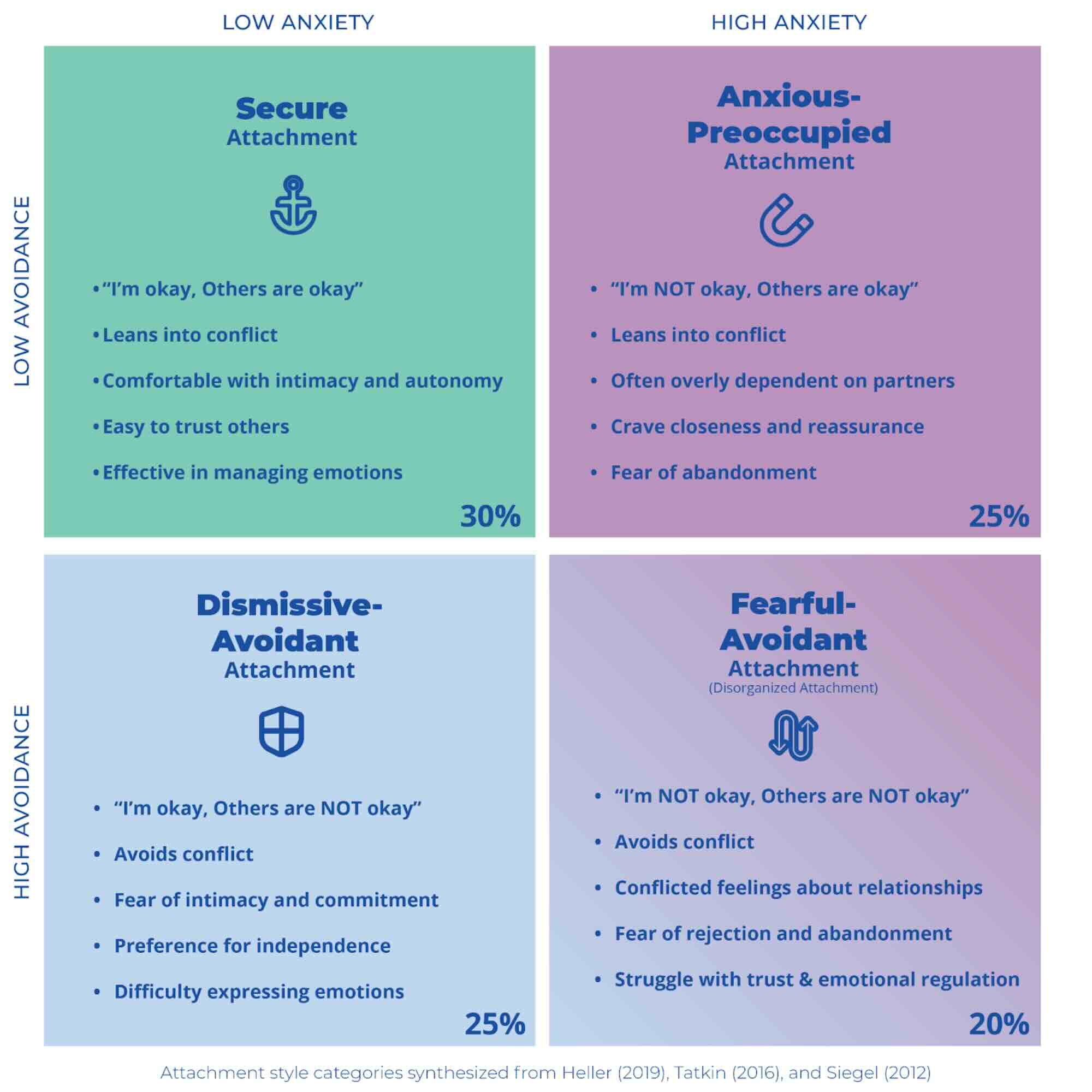
Secure Attachment
Characteristics
Individuals with a secure attachment style feel confident in their relationships and trust their partners.
They are comfortable with both intimacy and independence and are able to effectively communicate their needs.
They have a positive view of themselves and their partners and are able to navigate conflicts constructively.
Effects
Securely attached individuals tend to have healthier and more fulfilling relationships. They have better emotional regulation and are more resilient in the face of relationship challenges.
Anxious-Preoccupied Attachment
Characteristics
Individuals with an anxious attachment style often feel insecure in their relationships.
They may have a fear of abandonment and constantly seek reassurance and validation from their partners.
They may be overly sensitive to changes in their partner’s behavior and may interpret them as signs of rejection.
Effects
Anxious individuals may experience high levels of stress and anxiety in relationships.They may have difficulty trusting their partners and may be prone to jealousy and possessiveness.
Dismissive-Avoidant Attachment
Characteristics
Individuals with an avoidant attachment style tend to prioritize independence and self-sufficiency.
They may feel uncomfortable with emotional intimacy and may avoid closeness with their partners.
They may have difficulty expressing their emotions and may appear emotionally distant or detached.
Effects
Avoidant individuals may struggle with forming and maintaining close relationships. They may have a fear of intimacy and may avoid commitment in relationships.
Fearful-Avoidant Attachment
Characteristics
Disorganized attachment combines elements of both anxious and avoidant attachment styles.
Individuals with a disorganized attachment style may have experienced inconsistent or abusive caregiving in childhood.
They may exhibit erratic behavior in relationships, alternating between seeking closeness and pushing their partners away.
Effects
Disorganized individuals may have difficulty regulating their emotions and may struggle with trust issues.
They may have a heightened risk of developing mental health issues such as anxiety, depression, or personality disorders.
Attachment styles are not fixed and can evolve over time.
Additionally, individuals may exhibit varying attachment styles in different relationships or contexts.
When we can experience to secure attachment IT IS POSSIBLE TO EARN A SECURE ATTACHMENT.
There are some instances where this may not be limited due to childhood trauma or neglect.
We’re here to help you improve school communities through the Attachment Theory
Benefits for Families, Schools & Personal life
Benefits of Secure Attachment for Families
1. Reduced Family Stress
When children feel securely attached, they’re generally calmer and more regulated emotionally. This means fewer tantrums, less defiance, and smoother daily routines reducing overall household tension and parental burnout.
2. Stronger Sibling Relationships
Securely attached children tend to develop better emotional regulation and empathy, which translates into more cooperative and compassionate relationships with siblings. They’re better equipped to share, negotiate, and resolve conflicts.
3. More Effective Communication
Secure attachment fosters open, honest communication patterns. Children feel safe expressing their feelings and needs, while parents become more attuned listeners. This creates a family culture where everyone feels heard and understood.
4. Greater Parental Confidence
When parents successfully build secure attachments, they gain confidence in their parenting abilities. This positive feedback loop encourages more
5. Improved Family Resilience
Families with secure attachment bonds navigate challenges more effectively. Whether facing illness, financial stress, or life transitions, the strong emotional foundation helps family members support each other and bounce back together.
6. Enhanced Emotional Safety
Secure attachment creates a home environment where all family members feel emotionally safe. This psychological safety allows everyone to be vulnerable, take healthy risks, and grow without fear of rejection or harsh judgment.
7. Positive Multigenerational Impact
Children who experience secure attachment are more likely to become securely attached parents themselves, breaking cycles of insecure attachment and creating healthier patterns that benefit future generations.
8. Deeper Family Connection and Joy
Perhaps most importantly, secure attachment fosters genuine closeness and enjoyment in family relationships. Families experience more moments of connection, laughter, and mutual delight—creating lasting positive memories and a strong sense of belonging.
These benefits compound over time, creating a family environment where everyone can thrive emotionally and relationally.
Benefits of Secure Attachment for Schools
1. Better Academic Performance and Workplace Readiness
Securely attached children have the emotional bandwidth to focus on learning rather than worrying about their safety or relationships. They’re more attentive, persistent with challenging tasks, and better able to absorb and retain information.
Crucially, secure attachment develops the very competencies employers will need most by 2030: creative thinking, analytical thinking, resilience, empathy, and curiosity. These aren’t skills we can simply teach in lessons they’re relational capacities that emerge when students feel safe, connected, and emotionally regulated.
2. Stronger Teacher Relationships and Reduced Burnout
Children with secure attachment tend to trust adults more readily and communicate openly with teachers. They’re comfortable seeking help when needed and respond well to guidance, making them easier to teach and support. This positive dynamic significantly reduces teacher stress and burnout—when students are emotionally regulated, cooperative, and responsive, teachers can focus on teaching rather than constant behavior management. The reciprocal nature of secure relationships means teachers feel more effective, valued, and energized in their work.
3. Enhanced Social Skills and Friendships
Secure attachment teaches children how to read social cues, show empathy, and navigate relationships. These skills translate directly into forming meaningful friendships, cooperating with peers, and participating positively in group activities.
4. Greater Emotional Regulation in the Classroom
Securely attached children can better manage frustration, disappointment, and anxiety at school. They’re less likely to have meltdowns, aggressive outbursts, or withdrawal episodes that disrupt their learning and classroom environment.
5. Increased Confidence and Risk-Taking
With a secure base at home, children feel safe enough to take academic risks—answering questions, trying new activities, and embracing challenges. This growth mindset helps them develop new skills and discover their potential.
6. Better Problem-Solving Abilities
Secure attachment fosters cognitive flexibility and creative thinking. These children approach problems with curiosity rather than fear, can think through multiple solutions, and persevere when initial attempts don’t work.earning.
7. Reduced Behavioral Issues and Better Attendance
Schools report fewer discipline problems with securely attached children. They understand boundaries, respond to redirection, and are less likely to act out for attention or struggle with authority figures. Additionally, securely attached students have better attendance rates, lower suspension rates, and are significantly less likely to drop out. When children feel connected to school and have positive relationships with teachers and peers, school becomes a place they want to be rather than avoid.
8. Smoother School Transitions
Whether starting kindergarten, changing schools, or moving to middle school, securely attached children handle transitions more successfully. They carry their sense of security with them, making it easier to adapt to new environments, routines, and expectations.
These benefits create a positive cycle where school success reinforces children’s confidence and security, further enhancing their educational journey and lifelong.
Personal Benefits of Secure Attachment
1. Healthier Romantic Relationships
Securely attached individuals form more stable, satisfying romantic partnerships. They communicate openly, trust their partners, handle conflict constructively, and maintain healthy boundaries. They can be both independent and intimate, avoiding the extremes of clinginess or emotional distance.
2. Better Mental Health
Secure attachment is strongly associated with lower rates of anxiety, depression, and other mental health challenges. These individuals have better emotional regulation, realistic self-esteem, and effective coping strategies. When they do face mental health struggles, they’re more likely to seek help and benefit from treatment.
3. Stronger Sense of Self
Securely attached people have a coherent, stable sense of identity. They know their values, strengths, and areas for growth. This self-awareness allows them to make authentic choices aligned with who they truly are, rather than being driven by fear or the need for external validation.
4. Greater Emotional Resilience
Life’s inevitable challenges—loss, failure, disappointment, change—are navigated more effectively. Securely attached individuals bounce back from setbacks, maintain perspective during difficult times, and emerge from adversity with learning and growth rather than lasting trauma.
5. More Fulfilling Friendships
Secure attachment enables deep, reciprocal friendships built on trust, empathy, and genuine connection. These individuals can be vulnerable with friends, offer meaningful support, navigate conflict without ending relationships, and maintain friendships across time and distance.
6. Better Physical Health
The mind-body connection means secure attachment benefits physical health too. Lower chronic stress leads to better immune function, cardiovascular health, and sleep quality. Securely attached people are also more likely to engage in healthy behaviors and seek medical care when needed.
7. Greater Life Satisfaction and Purpose
Securely attached individuals report higher overall life satisfaction and sense of meaning. They can pursue goals that matter to them, find joy in everyday moments, maintain optimism without denying reality, and create lives that feel authentic and purposeful.
8. Effective Parenting Abilities
Perhaps most importantly for the next generation, securely attached adults are more likely to become secure, attuned parents themselves. They can meet their children’s emotional needs, regulate their own emotions during parenting challenges, and break cycles of insecure attachment—creating a positive legacy.
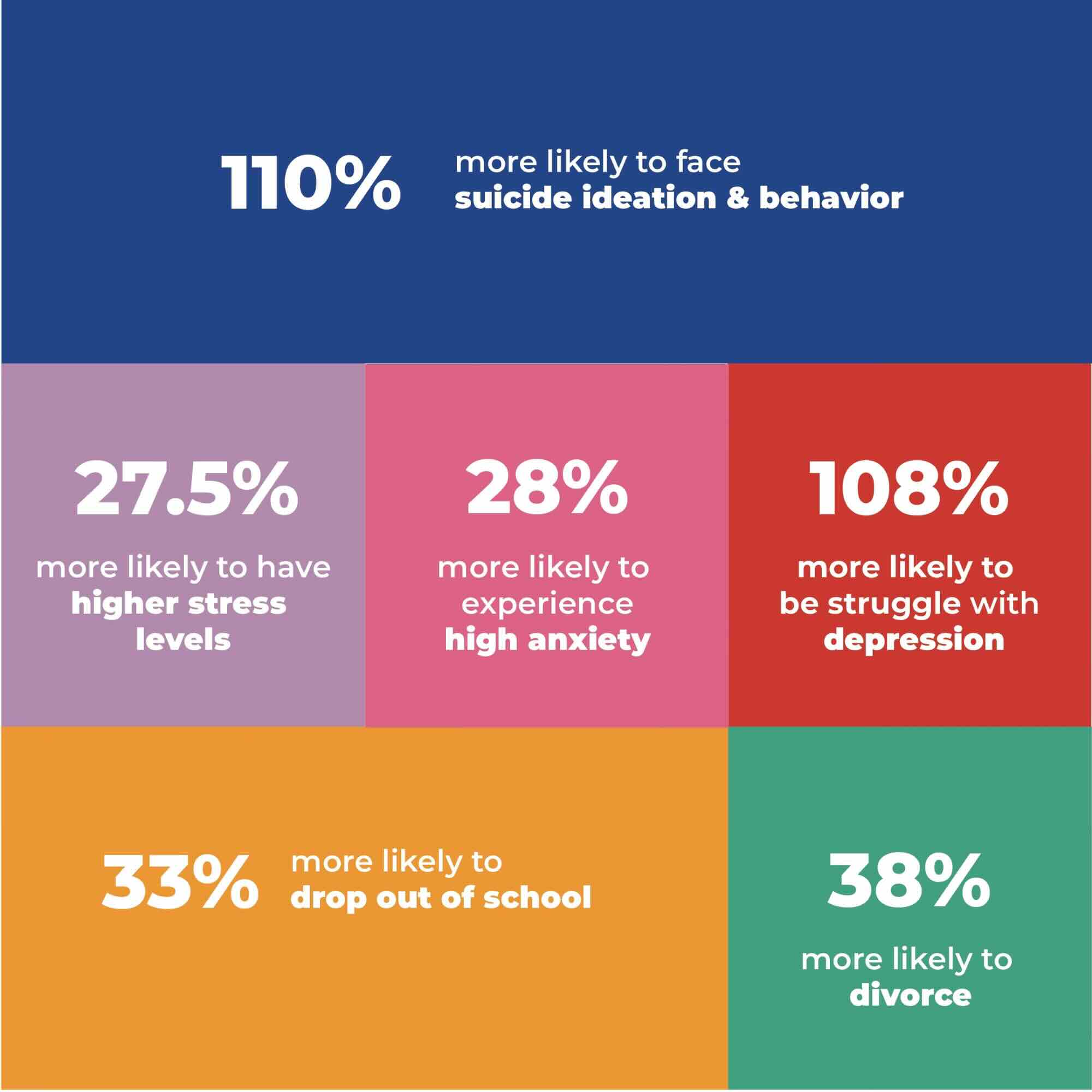
Compared to people with secure attachment, people with insecure attachment are:
Disclaimer: This content is provided solely for educational purposes and should not be considered as medical advice. These materials are not designed to diagnose or treat mental health conditions, nor should they be used as a substitute for professional psychological care or psychotherapy. If you are seeking assistance for mental health issues, it is important to consult with a qualified healthcare professional.
Preventing Teacher Burnout
Teacher-Student Relationships
- Attachment theory suggests that early caregiver relationships influence emotional bonds. Teachers form attachment-like bonds with students.
- Secure attachment fosters emotional safety, reducing stress and promoting engagement, which can decrease burnout.
- Insecure attachment (e.g., anxious, avoidant) can lead to emotional dysregulation, increasing burnout risk.
Teacher Attachment Style and Burnout
- Teachers’ attachment styles affect how they manage stress and relationships.
- Securely attached teachers set boundaries, manage stress, and respond empathetically, reducing burnout.
- Insecurely attached teachers may struggle with emotional regulation, contributing to burnout.
Self-care and Professional Learning
Understanding one’s attachment style helps teachers manage stress and prevent burnout.
Professional development programs on emotional intelligence, attachment theory, and self-reflection can help teachers cope more effectively.
Impacts of Teacher Burnout on Students
Burned-out teachers may withdraw emotionally, becoming irritable and less responsive. This impacts the teacher-student relationship, reducing student engagement and well-being.
A teacher’s poor emotional state directly affects students, creating a cycle of disengagement and poor classroom climate.
Promoting Secure Attachments
- Teachers who understand attachment theory can foster secure relationships by:
- Building trust through consistent interactions.
- Acknowledging students’ emotional needs.
- Creating a safe, emotionally regulated classroom.
- These practices reduce emotional demands on teachers and improve classroom dynamics.
Discover your attachment style
How your attachment style shows up with romantic partners and at work.
Resources
García-Rodríguez, L., Iriarte Redín, C., & Reparaz Abaitua, C. (2023). Teacher-student attachment relationship, variables associated, and measurement: A systematic review.
Educational Research Review, 38, 100488.
Events
We offer monthly webinar for school personnel, parents and caretakers.
Next Events: to be announced:
Past Events: :
For Parents
-
Self-Regulation: Parenting from a Grounded Place – Aïcha Doucouré, ACC PCC
-
An Interview with Sue McIntosh, Author of Therapeutic Children’s Books Grounded in Attachment Theory – Sue McIntosh (Video Passcode: =7N@UQq@)
For everyone
- Building Emotional Resilience: Mental Health Wellness and Attachment Styles in the Age of Social Media – Dr. Judy M. Brannon
- Overcoming Chronic Stress & Burnout – Annette Delabarbara (Video Passcode: ^xO6fvL)
- Emotional Freedom Tapping: Empowering Students to Self-Regulate Emotions – Sadaya Zimmerle (Video Passcode:VHX47x?)
- Resilience in Young Adults: The biochemical and behavioral patterns of adolescent attachment changes following social turbulence and how to address them – Adam Lane Smith, PhD (Video Passcode: S@G82DXW)
For School Personnel
-
Conflict Resolution Skills for Students with Insecure Attachment Styles: Building Resilience and Healthy Relationships – Sara Webb (Video Passcode: .0SL0hG%
-
Creating Healthy Connections: Supporting Students with Insecure Attachments Through Boundaries – Zephira Derblich-Milea (Video Passcode: tY0#X8R=)
-
Self-Regulation: Supporting Students from a Grounded Place – Aïcha Doucouré, ACC PCC